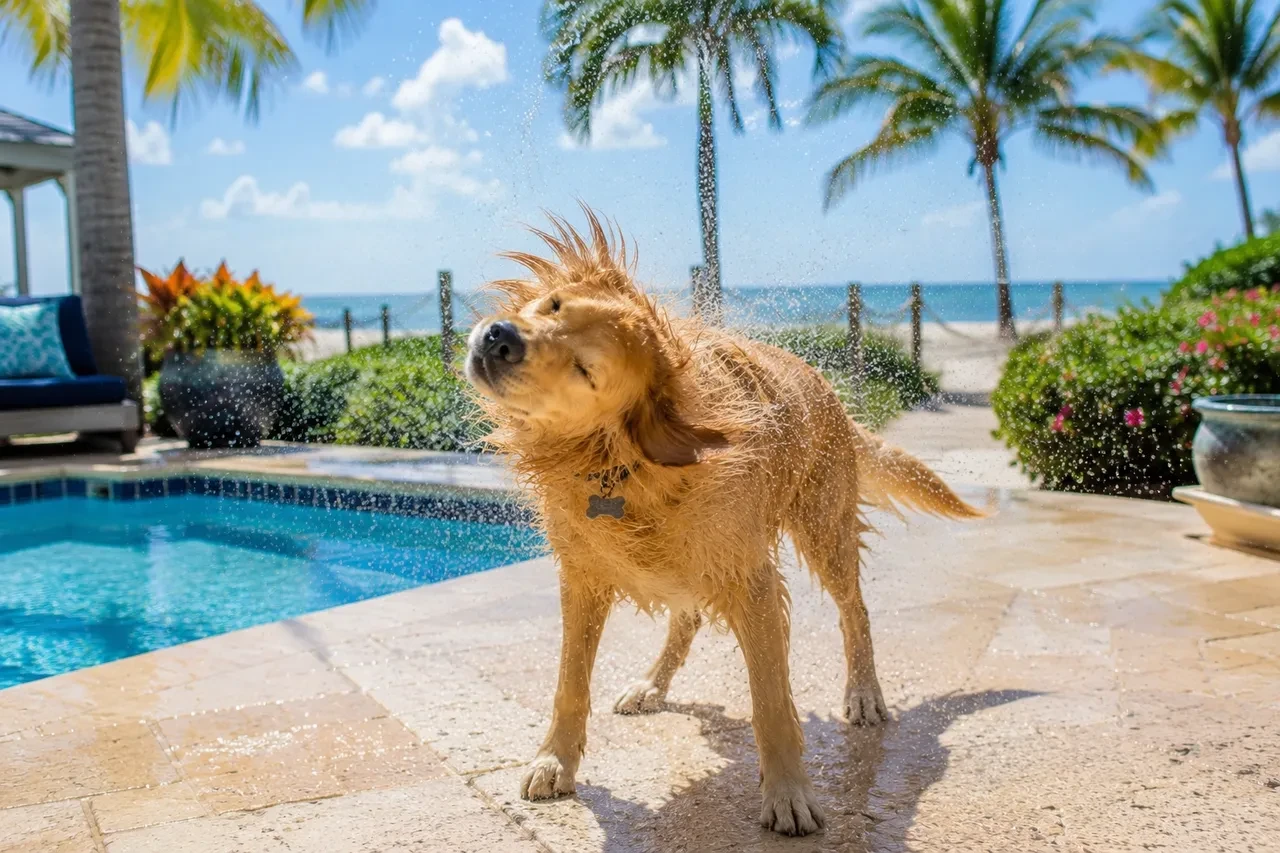
Why Does My Dog Shake Off? Insights From a Tampa Bay Area Dog Trainer
🐾 What if one of your dog’s most common behaviors was actually one of their most important forms of communication?
Have you ever watched your dog meet another dog, finish a training exercise, leave the veterinarian’s office, or simply walk away from something exciting, only to suddenly perform a full-body shake as though they had just jumped into a swimming pool?
No, they’re not imagining they’re wet.
They’re doing something fascinating:
The Shake-Off.
At Cultured Canines of Tampa, one of the things we love most about positive reinforcement dog training is helping families learn to understand what their dogs are trying to communicate. Because sometimes, the most important conversations happen without a single bark.
What Is a Dog Shake-Off?
A shake-off is exactly what it sounds like: a dog rapidly shaking their entire body from nose to tail, despite not being wet.
You might notice your dog shake off after:
✓ Greeting another dog
✓ Visiting the veterinarian
✓ Playing a little too hard
✓ Hearing a startling noise
✓ Finishing a training exercise
✓ Meeting a new person
✓ Riding in the car
✓ Being hugged or handled
✓ Experiencing excitement or mild stress
For many years, dog trainers and behavior professionals have viewed shake-offs as a way for dogs to release tension and regulate emotions. More recent observations suggest that shake-offs may also function as a transition behavior, helping dogs move from one activity, emotional state, or experience to the next.
Your dog may literally be helping themselves reset.
🐾 A Built-In Emotional Reset Button
Imagine finishing a stressful meeting, taking a deep breath, stretching your shoulders, and saying:
“Okay, that’s over.”
That’s similar to what many dogs appear to be doing.
Dogs experience emotional arousal just like humans do. Whether that arousal comes from excitement, uncertainty, stress, surprise, frustration, or even intense happiness, their bodies sometimes need a way to release that energy.
The shake-off may serve as a natural physical and emotional reset.
This is why you’ll often see dogs shake off after:
✓ Playing with another dog
✓ Hearing thunder
✓ Leaving the groomer
✓ Successfully navigating something challenging
✓ Meeting someone new
✓ Recovering from a startling event
And honestly?
We humans could probably benefit from doing the same thing.
A Little History: Dogs Have Been “Shaking It Off” for a Very Long Time
Domestic dogs didn’t invent the shake-off.
Their ancestors and wild relatives have long relied on subtle body language to navigate social interactions, regulate emotions, and reduce conflict. Dogs don’t always communicate through barking, growling, or obvious behaviors.
Much of their communication happens quietly.
Many canine behavior professionals discuss shake-offs alongside other body language signals that help dogs manage social situations and emotional experiences.
That doesn’t mean every shake-off indicates stress. Sometimes it simply means:
“That was exciting."
"That was unexpected."
"I’m ready to move on now.”
As with almost all canine body language:
Context matters.
Context Is Everything
A shake-off by itself doesn’t automatically mean your dog is scared, anxious, or overwhelmed.
It depends on what happened immediately before and after.
For example:
• A dog who shakes off after a play session may simply be releasing excitement.
• A dog who shakes off after meeting a new person may be processing social pressure.
• A dog who shakes off after a veterinary exam may be transitioning away from an uncomfortable experience.
This is one of the reasons why understanding canine body language is so important.
When we learn to observe instead of assume, we can better understand how our dogs are experiencing the world around them.
🔎 Become a Detective
Here’s a fun challenge:
For the next week, pay attention every time your dog performs a shake-off.
Ask yourself:
✓ What happened immediately before it?
✓ Was my dog excited?
✓ Surprised?
✓ Nervous?
✓ Relieved?
✓ Concentrating really hard?
✓ Did my dog appear calmer afterward?
You may begin noticing patterns that you’ve never seen before.
Once you start paying attention to canine body language, it’s difficult to stop seeing just how much information our dogs are sharing with us every day.
💡 Fun Training Tip #1: Celebrate the Shake
When a dog performs a shake-off after something mildly stressful or exciting, many positive reinforcement trainers consider this a good sign.
Why?
Because it often means the dog is processing the experience and moving on.
Instead of rushing them into the next activity, allow them a moment to complete their reset before asking them to do something else.
Sometimes, the best training happens during the pause.
💡 Fun Training Tip #2: Don’t Ignore Repeated Shake-Offs
While occasional shake-offs are completely normal and healthy, repeated shake-offs in a short period of time may indicate that your dog is becoming overwhelmed.
If your dog is repeatedly shaking off during:
✓ Training sessions
✓ Walks
✓ Social interactions
✓ Veterinary visits
✓ Busy environments
It may be time to:
• Increase distance
• Lower the difficulty
• Shorten the session
• Offer a break
Dogs learn best when they feel safe enough to think, process, and recover.
💡 Fun Training Tip #3: Pair Observation With Compassion
The more you notice your dog’s shake-offs, the more opportunities you have to support them.
If your dog shakes off after hearing a loud noise, you might offer a calming activity.
If your dog shakes off after seeing another dog on a walk, you might create more distance.
If your dog shakes off after being handled or groomed, you might slow down and make the experience more comfortable next time.
Positive reinforcement training isn’t just about rewarding behaviors we like.
It’s also about noticing how our dogs feel and helping them feel safe enough to make good choices.
🐾 What Your Dog May Be Teaching You
One of the most beautiful things about dogs is that they are honest communicators.
They may not speak in words, but they are constantly giving us information through their bodies.
A shake-off can remind us:
To pause.
To notice.
To soften.
To ask:
“What did my dog just experience, and how can I help them feel more comfortable next time?”
That shift in perspective can change everything.
The Takeaway
The next time your dog performs a dramatic full-body shake after meeting another dog, finishing a training exercise, or walking away from something exciting, don’t dismiss it.
They’re communicating.
They’re processing.
They’re regulating.
And perhaps most importantly, they’re reminding us that sometimes the healthiest thing we can do is simply shake it off and move forward.
At Cultured Canines of Tampa, we provide force-free, positive reinforcement dog training services for families throughout Apollo Beach, Riverview, Valrico, FishHawk Ranch, Wesley Chapel, and the Greater Tampa Bay area. Whether you’re searching for a dog trainer in Apollo Beach, in-home dog training in Riverview, positive reinforcement dog training in the Tampa Bay area, puppy training, or support for your adolescent or adult dog, our goal is to help you build a calmer, more connected life with your dog through compassionate, science-based training.
The more we learn about canine body language, the more we realize that our dogs are communicating with us all the time.
Sometimes, understanding our dogs isn’t about asking them to do more.
It’s about learning to notice what they’re already trying to tell us.